
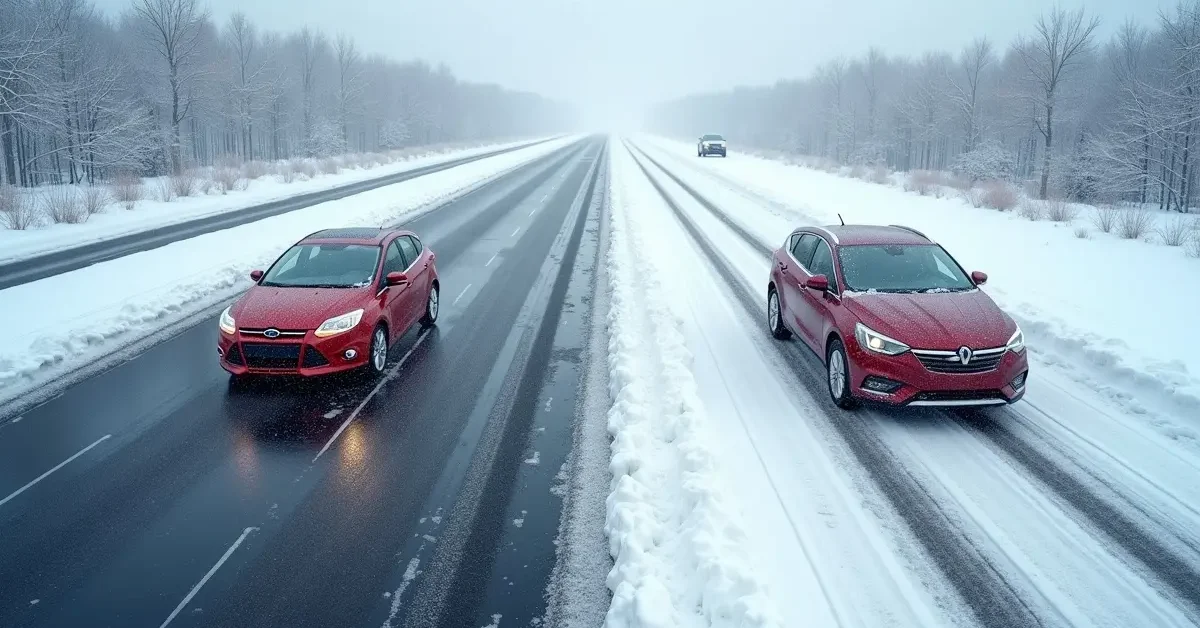
Winter throws two very different enemies at drivers: the one you can’t see (Black Ice) and the one you can’t push through (Deep Snow).
Many drivers make the mistake of treating them the same way. However, using the wrong technique for the wrong hazard leads to accidents.
If you treat ice like snow and use too much power, you will spin out. But if you treat snow like ice and drive too slowly, you will get stuck.
The secret to winter driving safety is understanding that black ice requires “finesse” (gentleness), while deep snow requires “momentum” (steady movement).
In this guide, we will explain the difference between black ice vs deep snow strategies and introduce the best tool for getting unstuck when nature wins.
Contents
How Do You Handle the Invisible Threat of Black Ice?
Black ice is dangerous because it is invisible. It creates a thin layer of “clear ice” that just looks like wet pavement. You should always be careful on bridges and overpasses because cold air flows underneath them, causing them to freeze first.
When driving on ice, finesse is everything. You must make zero sudden movements. Never use cruise control on ice. If your car hits a slick patch, the cruise control might try to speed up, causing your wheels to spin and lose control.
If you do feel the truck slide, do not slam on the brakes! This locks your wheels. If you have ABS (Anti-lock Braking System), hold the brake pedal steady and let the computer do the work.
If your rear wheels slide left, turn your steering wheel left. This technique, known as steer into the skid, helps you regain control. Knowing how to drive on black ice is about staying calm and gentle.
What is the Secret to Driving in Deep Snow?
Unlike ice, deep snow creates a physical barrier. It causes “drag” against your tires. If you stop moving, the snow packs around your warm tires and freezes, trapping you.
Therefore, the golden rule for deep snow driving is momentum. You must keep moving, especially if you are going up a hill. Use steady, progressive power. If your truck has a “Snow Mode,” use it. This helps stop your wheels from spinning too fast and digging a hole.
Also, do not be fooled by the “4WD Myth.” While 4WD on ice helps you get moving, it offers zero advantage when trying to stop. It also cannot stop you from high-centering, which happens when the snow is so deep it lifts your truck off the ground.
What Should You Do When You Get Stuck?
Sometimes, a slide on black ice sends you into a ditch filled with deep snow. Now you are truly stuck. Your tires spin, and you cannot move.
Many old guides suggest using sand, kitty litter, or floor mats for traction. However, sand washes away instantly on slippery ice, and floor mats often shoot out dangerously without gripping anything. A much safer and professional solution is TruckClaws.
TruckClaws work differently than tires. While rubber tires rely on friction (which ice does not have), TruckClaws provide a mechanical “cleat” or “paddle.” They strap to your wheel and physically bite into the ice or scoop through the snow.
This professional traction aid is designed for self-rescue. It allows you to crawl out of a ditch without waiting hours for a tow truck, making it the ultimate tool for getting unstuck.
Are You Ready for Winter’s Worst?
To survive winter, remember the core difference: treat ice with gentleness and treat snow with steady power.
If you do get stranded, stay inside your vehicle where it is warm. However, make sure your exhaust pipe is clear of snow. A blocked exhaust can force deadly carbon monoxide into the cab.
Don’t let a patch of ice ruin your trip. Carry a TruckClaws recovery kit for peace of mind this winter.
